
A 50-pound flat-screen TV breaks during a move. Under the most basic coverage a mover offers, the payout is $30. Not $30 toward a new one. Just $30. That is the part of moving insurance nobody explains up front.
Most people learn this after something is already broken. The confusion starts with the name. What most movers provide is not insurance at all. It is valuation coverage, and the option you pick on your paperwork decides what you get back if something goes wrong.
Here is what each option covers, what it leaves out, how the rules work for a local move in Ohio, and how Cardinal handles it.

Moving insurance and valuation coverage are not the same thing
The two terms get used interchangeably. They should not be.
Valuation coverage is the mover’s liability
Valuation coverage is the mover’s own promise about how much it will pay if your belongings are lost or damaged in its care. It is written into your bill of lading, the contract you sign before loading starts. It is not a policy from an insurance company, and the mover does not need an insurance license to offer it.
For moves that cross state lines, the Federal Motor Carrier Safety Administration (FMCSA) sets the rules, laid out in its FMCSA guide to valuation and insurance options. For moves that start and end in Ohio, the Public Utilities Commission of Ohio (PUCO) does. More on that below.
Moving insurance is a separate product
True moving insurance is sold by a licensed insurance company. You can buy it on your own, and some movers offer it through a third-party provider. It can cover situations valuation coverage does not, depending on the policy.
What “licensed and insured” on a mover’s website means
When a moving company says it is licensed and insured, it usually means the business carries the liability and cargo insurance required to register and operate. Ohio requires household goods movers to register with the PUCO and file proof of insurance. That protects everyone if a truck is in an accident or a wall gets damaged. It does not mean every item in your house is covered at full value. Your valuation choice decides that.
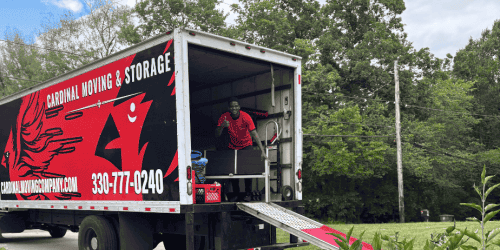
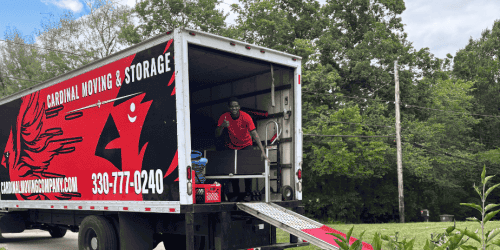
Cardinal Moving & Storage operates under USDOT #4343483, is registered with the PUCO as a household goods carrier (PUCO #656639), and is a member of the Ohio Trucking Association. You can confirm it on the PUCO list of registered household goods carriers.
Released value protection: the 60 cents per pound default
Released value protection is the minimum level of coverage. It costs nothing extra and, under federal valuation rules, pays up to $0.60 per pound, per item. The payout is based on weight, not on what the item is worth.
How the math works
Light, expensive items fare the worst. Here is how three common items play out:
| Item | Weight | Replacement Cost | Maximum Payout |
|---|---|---|---|
| Flat-screen TV | 50 lbs | $1,200 | $30 |
| Solid wood dresser | 100 lbs | $2,500 | $60 |
| Laptop | 5 lbs | $1,500 | $3 |
Replacement costs are example values for illustration.
When released value makes sense
It can be a reasonable choice if most of what you are moving is inexpensive or easy to replace, and you are carrying valuables, electronics, and important documents in your own car. On interstate moves, you have to sign a specific waiver to choose it. On an Ohio move, ask your mover how the choice is recorded on your paperwork.
Full value protection: repair, replace, or pay
Full value protection makes the mover responsible for the replacement value of anything lost or damaged. If an item is lost, destroyed, or damaged, the mover will do one of three things:
- Repair it to the condition it was in when the crew picked it up.
- Replace it with an item of like kind and quality.
- Pay you the cost of the repair or replacement.
On interstate moves, full value protection is the default under FMCSA rules unless you sign away to released value. It comes with an added charge, usually based on the total declared value of your shipment.
Declared value and minimums
Declared value is the total dollar amount your shipment is covered for. Many movers set a minimum based on weight. For interstate moves, federal household goods rules (49 CFR Part 375) use $6.00 per pound, so a 4,000-pound shipment carries a declared value of at least $24,000. Ohio movers set their own terms in their PUCO tariffs, and some use the same $6.00 formula with a minimum dollar floor.
Deductibles and high-value items
Some full value plans include a deductible. A higher deductible lowers the cost, but you cover small claims yourself.
The bigger trap is high-value items. Anything worth more than $100 per pound, such as jewelry, fine art, collectibles, or high-end electronics, usually has to be listed in writing on a high-value inventory before the move. Skip that step and the item may be covered at a much lower rate. The FMCSA valuation guide covers how to declare these items.
How moving insurance works for a local move in Ohio
Most guides on this topic are written for cross-country moves. If you are working with movers in Akron on a move to Medina or across Cleveland, a different set of rules applies.
FMCSA rules vs. PUCO rules
FMCSA valuation rules apply to interstate moves. A move that starts and ends inside Ohio falls under the PUCO. Every registered Ohio household goods mover files a tariff with the PUCO, a public document listing its rates, services, and valuation options.
PUCO rules set $0.60 per pound, per article as the minimum liability a mover can offer, and each mover’s tariff is filed with the PUCO. Most tariffs also list a full replacement value option at an added charge. Because each mover writes its own tariff, declared value minimums, rates, deductibles, and exclusions differ from one company to the next.
How to check a mover before you book
Look the company up on the PUCO list of registered household goods carriers. Then ask to see the valuation section of the tariff or bill of lading before move day. A mover that can explain its options clearly on the phone is a good sign. For the rest of the vetting, here are the questions to ask before hiring an Ohio moving company.
How valuation coverage works at Cardinal
Your options
Every Cardinal move includes the state-required minimum of $0.60 per pound, per item. Cardinal also offers full coverage options for customers who want more than that. The price depends on the weight of your move and whether you are shipping any unusually expensive items, so it is quoted for your move rather than posted as a flat rate.
The call before move day
Our claims director calls each customer before the move to explain the options and offer additional coverage. Use that call to ask about anything on your inventory that is worth more than the default would pay.
If you need to file a claim
Cardinal’s claims team sends you a claims package to fill out. Have your photos, the item description, and the date you found the damage ready when you do.
Straight answers before anything goes wrong
We would rather you know exactly what is and is not covered before move day than find out after something breaks. If a problem does come up, we deal with it openly and in good faith. Cardinal is a family business, and we treat your belongings the way we would treat our own.
What moving coverage usually doesn’t cover
Even full value protection has limits. These are the most common gaps.
Boxes you packed yourself
If you pack a box and something inside breaks, the FMCSA notes it can be harder to prove the damage happened in transit. Many movers limit liability for customer-packed boxes unless the box itself shows damage. If your fragile items matter, compare packing it yourself vs. hiring professional packers, or learn how to pack fragile items like a pro before you start.
Undeclared valuables, cash, and documents
Jewelry, cash, coins, passports, and important papers should travel with you. High-value items left off the written inventory can fall back to much lower coverage.
Hazardous items and pre-existing damage
Flammables, propane tanks, and perishables generally cannot go on the truck, and packing them without telling your mover can limit its liability. Pre-existing scratches and normal wear are not covered. Other exclusions depend on the mover’s tariff, so read that section before you sign.
Third-party moving insurance and your homeowners or renters policy
Before you buy extra coverage, call your insurance agent. Some homeowners and renters policies cover belongings in transit. Many limit that coverage or exclude items while they are in a mover’s possession. Ask three questions:
- Does my policy cover belongings while a moving company has them?
- What are the limit and the deductible for that coverage?
- Are items covered if they go into storage during the move?
If there is a gap, a third-party moving insurance policy can fill it. These policies come from licensed insurers and can sit on top of the mover’s valuation coverage. They make the most sense for antiques, art, and high-value shipments.
How to protect your belongings before moving day
Coverage only works as well as your documentation. Before the truck arrives:
- Photograph valuable items and any existing scratches, dents, or chips.
- List anything worth more than $100 per pound in writing and give that list to your mover.
- Read the valuation section of your bill of lading before you sign, and know which option you chose.
- At delivery, check your items and note any visible damage on the paperwork before signing.
- Report damage in writing as soon as you find it. Federal rules give interstate customers nine months to file a written claim, and Ohio requires movers to allow at least 60 days on a local move. Cardinal’s claims team will send you a claims package to complete.
Frequently asked questions
Is moving insurance required in Ohio?
You are not required to buy moving insurance. Ohio requires registered household goods movers to carry their own insurance and to offer at least $0.60 per pound, per article valuation coverage. Adding full value protection or a third-party policy is your decision.
Do movers have to pay for damaged items?
Yes, up to the coverage level you selected. Under released value, the payout is capped at $0.60 per pound, per item. Under full value protection, the mover must repair, replace, or pay for the item, subject to its tariff terms and any deductible.
Does Cardinal offer full value protection?
Yes. Cardinal offers full coverage options on top of the state-required $0.60 per pound, per item. The cost depends on the weight of your move and whether you are shipping very expensive items. Our claims director calls each customer before the move to go over the choices.
Does homeowners insurance cover my belongings during a move?
Sometimes. Some policies extend coverage to belongings in transit, while others limit it or exclude items in a mover’s care. Call your agent before move day and ask specifically about goods in transit and in storage.
How long do I have to file a moving damage claim?
For interstate moves, federal rules give you nine months from delivery to file a written claim. For moves within Ohio, state rules require your mover to give you at least 60 days from the date of the move. Either way, file as soon as you find damage. Photos taken the same day make a claim much easier to support. At Cardinal, our claims team sends you a claims package to fill out.
Does Cardinal cover boxes I pack myself?
No. Cardinal does not cover the contents of boxes you pack yourself. If fragile items matter to you, ask about having our crew pack them.
Is full value protection worth it for a local move?
If you are moving furniture, electronics, or anything you would replace at full cost, it usually is. Released value pays so little on most household items that it rarely covers a real loss. If most of your items are low value and you are carrying valuables yourself, released value can be enough.
Know your coverage before the truck shows up
Cardinal Moving & Storage’s claims director calls every customer before move day to explain valuation options and offer additional coverage, so the choice on your bill of lading is one you made on purpose.
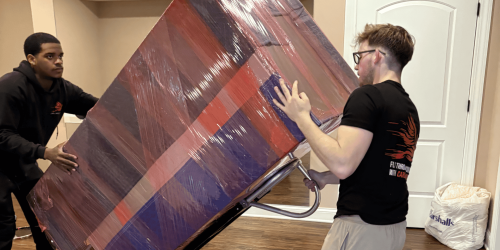
Our crews are Cardinal employees, not day laborers, and furniture is wrapped in moving blankets before it leaves the room, the professional standard in the moving industry. The best claim is the one you never have to file.
Cardinal is licensed, insured, and an Ohio Trucking Association member, with 381 five-star Google reviews from customers across Akron, Cleveland, and Medina.
Call (330) 777-0240 or request your moving quote.