The armoire made it down the first six steps. Then it hit the turn in the staircase. Now it won’t go forward or back, there’s a fresh gouge in the drywall, and someone’s fingers are pinned against the banister. Most DIY heavy lifts go wrong exactly like this: one bad angle nobody planned for.
Hiring heavy furniture movers protects three things at once: the piece, the house it moves through, and the people carrying it. Below is what makes heavy furniture risky, what a professional crew does differently, and how to tell when a job is worth handing off.
What counts as heavy furniture
The usual suspects
Some pieces announce themselves the second you try to tip them. Sleeper sofas, sectionals, solid-wood dressers, armoires, china hutches, and marble-top tables all belong here. So do treadmills, pool tables, and anything with a motor or a metal frame.
Safes and pianos sit at the far end of the scale. Their weight is concentrated and unforgiving, which is why heavy item movers treat them as their own category with their own plan. We’ve covered both in depth: see how we move a heavy safe and what to expect when hiring piano movers.

Awkward can be harder than heavy
Weight is only part of the problem. A tall bookcase with a high center of gravity wants to tip. A glass-front curio can only lean so far. An antique dresser with dry, loose joints can rack out of square if someone grabs the wrong corners. A 150-pound piece with a bad shape often gives a crew more trouble than a 300-pound one with a flat base and solid handholds.
The real risks of moving heavy furniture yourself
Injuries
Furniture injuries usually come from three things: lifting with a twisted back, losing footing on a stair, or catching a hand between the piece and a door frame. OSHA’s ergonomics guidance names forceful exertion, awkward posture, and repeated lifting as core risk factors for strains and musculoskeletal injuries. A heavy move on a Saturday checks every box.
Damage to your home
Heavy furniture leaves a trail when it’s moved wrong. The usual casualties are scratched or dented hardwood, torn carpet at the top of the stairs, cracked banister spindles, chipped door jambs, and scuffed drywall at every tight corner. Repairing original trim or a century-old staircase is rarely quick, and it’s never cheap to match.
Damage to the piece
The furniture takes hits too. Legs snap when a piece gets dragged instead of lifted. Veneer splits along the edges. Drawer runners bend when a dresser is carried full. Mirrors crack when they stay attached. Nearly all of it is preventable with a few minutes of prep and the right wrap.
What professional heavy furniture movers do differently
They plan the path first
Before anything leaves the floor, a good crew walks the route. They measure doorways, stair width, and ceiling clearance at the landings. They decide which doors come off their hinges, which end of the piece leads, and where each person stands at every turn. Most damage happens at the corner nobody measured.
They bring the right equipment
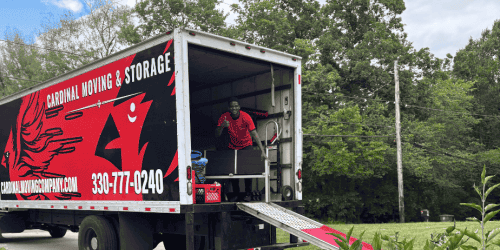
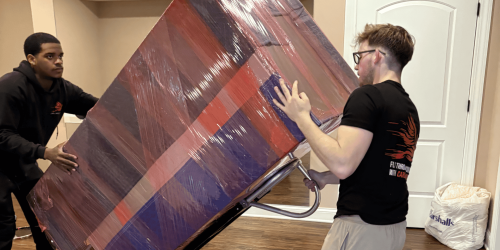
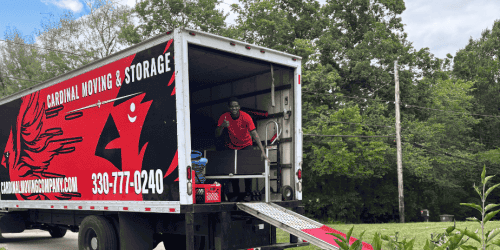
Our crews arrive with gear most households don’t keep in the garage, from dollies and lifting straps to heavy moving blankets that protect your furniture and your home. Blankets stop the scratches and dents. Straps let a crew carry weight with their legs and shoulders instead of their fingertips.
They take things apart and put them back together
A lot of heavy furniture gets much easier once it’s broken down. Legs come off sofas and tables. Mirrors come off dressers. Bed frames and sectionals separate into pieces that clear a standard doorway. A trained crew bags and labels the hardware, so reassembly at the new place is fast and nothing goes missing.
They work as one team
Heavy lifts run on communication. Who calls the pivot. Who takes the weight on the stairs. When to stop and reset. At Cardinal Moving & Storage, our movers are employees who train and work together, not strangers matched through an app the night before. When the same crew moves heavy pieces week after week, they already know each other’s rhythm by the time the dresser reaches the landing. That consistency is the backbone of our specialty moving services.

Why Northeast Ohio homes make heavy moves harder
A lot of the housing in Akron, Cleveland, and the older suburbs around them was built long before anyone designed a staircase around a king-size box spring. Narrow stairwells, tight landings, steep basement steps, and walk-up apartments above storefronts are all common. Add a Northeast Ohio winter, and outdoor steps and walkways can stay slick for months.
Complex buildings are where a trained crew earns its keep. After our team delivered furniture to a five-story historic building, customer Kristina K. wrote: “It was real teamwork. Not every team would actually perform under pressure. Not this team.” Moving in or around the city? Our Akron movers handle heavy pieces as part of every local move.
When DIY is fine and when to call movers
Not every heavy item needs a crew. Be honest about the job in front of you.
You can probably handle it yourself if you’re:
- Sliding a bookcase or dresser across a room on the same floor
- Carrying a piece two people can lift comfortably on flat ground
- Moving something you wouldn’t mind replacing if it got damaged
Call professionals if the move involves:
- Any piece going up or down stairs
- Anything that takes more than two people to lift
- Heirlooms, antiques, or pieces with glass, stone, or mirrors
- Safes, pianos, treadmills, or pool tables
- Tight doorways, narrow halls, or a route with several turns
How to prepare for heavy furniture movers
A little prep speeds up the job and lowers the risk for everyone involved.
- Empty every drawer, shelf, and cabinet. Contents add weight and shift during the lift.
- Measure the destination. Confirm the piece fits the room, the doorway, and the stairwell at the new place.
- Clear the path. Move rugs, decor, and small furniture out of the route.
- Point out weak spots. Tell the crew about loose legs, repaired joints, or delicate finishes before anyone lifts.
- Take photos. A quick picture of each valuable piece gives you a clear record of its condition.
Still weighing how to move heavy furniture on your own? Use this list as a test. If the prep already feels like a project, the move will be too.
Frequently asked questions
How much do movers charge to move heavy furniture?
Most local movers bill by the hour, and the total depends on crew size, stairs, disassembly, and distance. Cardinal Moving & Storage’s local moves with a three-person crew are $175 per hour. Call (330) 777-0240 for a quote based on your specific pieces.
Will movers move just one heavy item?
Yes, and we enjoy these jobs. We handle single-item moves and in-home moves, like getting a dresser up to the second floor or a treadmill down to the basement. Tell us the item’s size and the route when you call so we send the right crew.
Do movers take apart and reassemble furniture?
Professional movers routinely disassemble bed frames, tables, and sectionals and rebuild them at the new place. Our crews bag and label all hardware so every bolt arrives with its piece.
What happens if something gets damaged during the move?
Cardinal Moving & Storage is licensed and insured under USDOT 4343483. Ask about coverage options when you book so you know exactly how your items are protected.
Leave the heavy lifting to our crew
Cardinal Moving & Storage is a family-owned company based in Akron, started by brothers Garrison and James Blake. Our employee crews handle sectionals, armoires, safes, and everything in between, backed by 300+ five-star Google reviews. We’re licensed, insured, and members of the Ohio Trucking Association.